30 Flowers That Start With V, Names, Full Care Guide & Photos
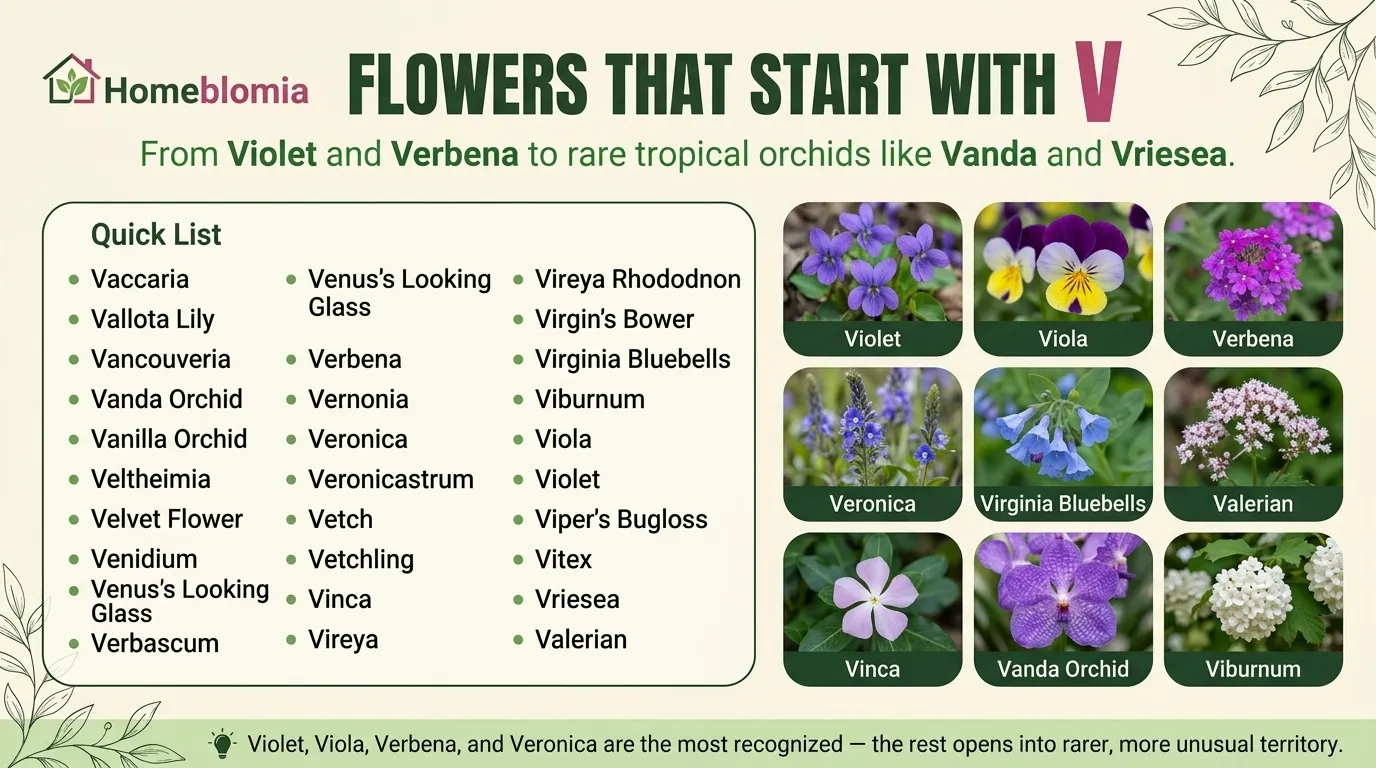
Quick answer: Flowers That Start With V are Violet, Viola, Verbena, and Veronica. Beyond those, the letter covers everything from Virginia Bluebells and Valerian to tropical rarities like Vanda Orchid and Vriesea.
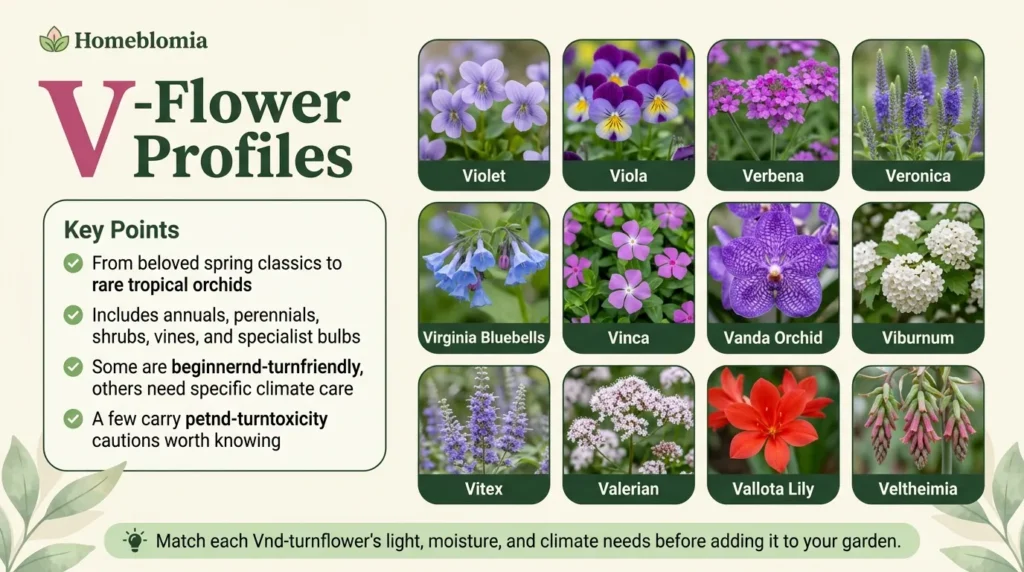
The letter V isn’t the largest flower group, but it covers unusual ground: soft spring woodland flowers, heat-tolerant summer annuals, tall pollinator perennials, fragrant flowering shrubs, and a run of genuinely striking tropical orchids. Violet, viola, and verbena are the names most people already know — after that, the list opens into far less familiar territory like Veltheimia, Vancouveria, and the Vanda orchid.
This guide covers V-flowers: a full comparison table, individual profiles for each one, companion planting notes, a seasonal care calendar, and an expanded FAQ. If you’re looking for the letter before or after this one, see Flowers That Start With U or continue to Flowers That Start With W.
Quick List
Common names, alphabetical: Vaccaria, Vallota Lily, Vancouveria, Vanda Orchid, Vanilla Orchid, Veltheimia, Velvet Flower, Venidium, Venus’s Looking Glass, Verbascum, Verbena, Vernonia, Veronica, Veronicastrum, Vetch, Vetchling, Vinca, Vireya Rhododendron, Virgin’s Bower, Virginia Bluebells, Virginia Spiderwort, Virginia Stock, Virginia Sweetspire, Viburnum, Viola, Violet, Viper’s Bugloss, Vitex, Vriesea, Valerian
Botanical-name-first: Viola odorata (Violet), Verbena × hybrida (Verbena), Veronica spicata (Speedwell), Mertensia virginica (Virginia Bluebells), Vanda spp. (Vanda Orchid), Vitex agnus-castus (Chaste Tree)
Full Comparison Table
| Common Name | Botanical Name | Type | Colors | Bloom Season | Light | Fragrant | Beginner-Friendly | Toxic to Pets |
|---|---|---|---|---|---|---|---|---|
| Violet | Viola odorata | Perennial | Purple, white | Spring | Part shade | Yes | Yes | No |
| Viola | Viola × wittrockiana | Annual/short-lived perennial | Purple, yellow, white, mixed | Spring, cool season | Sun–part shade | No | Yes | No |
| Verbena | Verbena × hybrida | Annual/perennial | Purple, pink, red, white | Late spring–frost | Full sun | No | Yes | No |
| Veronica | Veronica spicata | Perennial | Blue, purple, white, pink | Summer | Full sun | No | Yes | No |
| Veronicastrum | Veronicastrum virginicum | Perennial | White, pale lavender | Summer | Sun–part shade | No | Moderate | No |
| Verbascum | Verbascum spp. | Biennial/perennial | Yellow, white, apricot, pink | Late spring–summer | Full sun | No | Moderate | Mildly, skin irritant |
| Valerian | Valeriana officinalis | Perennial | White, blush pink | Early–mid summer | Sun–part shade | Yes | Moderate | Attractive to cats, mild effect |
| Vinca | Catharanthus roseus | Tender perennial/annual | Pink, white, red, purple | Summer–frost | Full sun | No | Yes | Yes — toxic, contains alkaloids |
| Venus’s Looking Glass | Triodanis perfoliata | Annual | Blue-purple | Spring–early summer | Sun–part shade | No | Moderate | No |
| Virginia Bluebells | Mertensia virginica | Perennial | Blue, pink buds | Spring | Part shade | No | Moderate | No |
| Virginia Stock | Malcolmia maritima | Annual | Pink, purple, white | Spring–early summer | Full sun | Yes | Yes | No |
| Virginia Spiderwort | Tradescantia virginiana | Perennial | Blue, purple, pink | Late spring–summer | Sun–part shade | No | Yes | Mildly, skin irritant |
| Vetch | Vicia spp. | Annual/perennial | Purple, pink, white | Spring–summer | Full sun | No | Moderate | No |
| Vetchling | Lathyrus spp. | Annual/perennial | Pink, purple, red | Spring–summer | Full sun | No | Moderate | Yes — seeds toxic in quantity |
| Vaccaria | Vaccaria hispanica | Annual | Pink, white | Summer | Full sun | No | Moderate | No |
| Viper’s Bugloss | Echium vulgare | Biennial | Blue-purple | Summer | Full sun | No | Moderate | Mildly, skin/GI irritant |
| Vallota Lily | Cyrtanthus elatus | Tender perennial | Red, scarlet | Late summer | Bright light | No | Moderate | Yes — bulb toxic |
| Vanda Orchid | Vanda spp. | Perennial/epiphyte | Purple, blue, pink, white, yellow | Varies | Bright filtered light | No | Moderate | No |
| Vanilla Orchid | Vanilla planifolia | Perennial vine | Cream, greenish-white | Warm season | Bright filtered light | Yes | No — specialist | No |
| Velvet Flower | Salpiglossis sinuata | Annual | Purple, gold, red, mixed | Summer–fall | Full sun–light shade | No | Moderate | No |
| Vancouveria | Vancouveria hexandra | Perennial | White, cream | Spring | Part shade–shade | No | Moderate | No |
| Venidium | Arctotis fastuosa | Annual | Orange, yellow, white | Summer | Full sun | No | Yes | No |
| Veltheimia | Veltheimia bracteata | Tender perennial | Pink | Winter–early spring | Bright light | No | Moderate | Yes — bulb toxic |
| Vernonia | Vernonia spp. | Perennial | Purple | Late summer–fall | Full sun | No | Moderate | No |
| Virgin’s Bower | Clematis virginiana | Vine | White | Late summer | Sun–part shade | No | Moderate | Mildly, sap irritant |
| Viburnum | Viburnum spp. | Shrub | White, pink | Spring | Sun–part shade | Yes | Yes | No |
| Vitex | Vitex agnus-castus | Shrub/small tree | Lavender-blue | Summer | Full sun | Yes | Moderate | No |
| Vireya Rhododendron | Rhododendron sect. Schistanthe | Shrub | Orange, red, pink, yellow | Varies by climate | Bright shade | No | No — specialist | Yes — rhododendrons toxic to pets |
| Virginia Sweetspire | Itea virginica | Shrub | White | Late spring–early summer | Sun–part shade | No | Moderate | No |
| Vriesea | Vriesea spp. | Bromeliad | Red, orange, yellow | Varies | Bright filtered light | No | Moderate | No |
Toxicity notes are general guidance only. Always check the ASPCA Animal Poison Control database before bringing a new plant into a home with pets.
Individual Flower Profiles
Violet (Viola odorata)
One of the most recognizable and beloved of all V-flowers, sweet violet produces small purple or white blooms with a soft, unmistakable fragrance in early spring. It thrives in part shade with moist, humus-rich soil, making it a natural fit for path edges and woodland-adjacent beds. It can self-seed and spread modestly over time, which most gardeners consider a feature rather than a problem in informal plantings.
Viola (Viola × wittrockiana)
The garden hybrid group that includes pansies and bedding violas, prized for reliable color through cool weather when few other flowers perform. Compact and forgiving, it tolerates light frost and works equally well in containers, border edges, and mass bedding displays.
Verbena (Verbena × hybrida)
A workhorse summer annual (or tender perennial in warm climates) that flowers continuously from late spring through the first frost. It thrives in full sun and tolerates heat and dry spells better than most bedding flowers, which is why it’s a common choice for hanging baskets and mixed containers that get little attention through summer.
Veronica (Veronica spicata)
Known as speedwell, this perennial produces upright spikes of blue, purple, white, or pink flowers that add vertical structure to a border of otherwise rounded blooms. It’s a strong pollinator plant and generally low-maintenance once established in full sun.
Veronicastrum (Veronicastrum virginicum)
Also called Culver’s Root, this native perennial grows taller and looser than Veronica, with slender white or pale lavender spikes well-suited to naturalistic or prairie-style plantings rather than tight formal borders.
Verbascum (Verbascum spp.)
Commonly known as mullein, this biennial or short-lived perennial produces tall, upright flower spikes in yellow, white, apricot, or pink. It tolerates poor, dry soil better than most flowering perennials, making it a good fit for gravel gardens and lean borders.
Valerian (Valeriana officinalis)
A cottage-garden perennial with airy clusters of white to blush-pink flowers and a light, sweet fragrance. Its loose habit softens more rigid borders. Note: valerian root is well known for its effect on cats, similar to catnip, so plant placement is worth considering in households with cats that might dig at or chew the plant.
Vinca (Catharanthus roseus)
Also called Madagascar periwinkle, this heat-loving annual (tender perennial in frost-free climates) keeps flowering through the hottest part of summer when many other bedding plants slow down. It’s an excellent choice for sunny containers and low-maintenance beds, but the plant contains alkaloids that are toxic if ingested by pets.
Venus’s Looking Glass (Triodanis perfoliata)
A delicate native annual wildflower with small blue-purple blooms, best suited to informal wildflower plantings and lean soils rather than polished borders.
Virginia Bluebells (Mertensia virginica)
One of the finest native spring woodland flowers, with pink buds opening into cool blue, bell-shaped blooms. It goes dormant and disappears entirely by mid-summer, so it’s typically planted alongside later-emerging shade perennials that fill the space it leaves behind.
Virginia Stock (Malcolmia maritima)
A compact, lightly fragrant annual well-suited to cool-season beds and border edges. It grows and blooms quickly from seed, making it a good filler for gaps in a spring planting scheme.
Virginia Spiderwort (Tradescantia virginiana)
A native perennial with blue, purple, or pink three-petaled flowers and a relaxed, slightly sprawling habit. It handles part shade and moisture-retentive soil well, fitting naturally into native-plant and pollinator-focused beds.
Vetch (Vicia spp.)
A sprawling flowering plant more common in meadows and informal plantings than manicured borders, valued primarily for its wildlife and pollinator support rather than as a showcase flower.
Vetchling (Lathyrus spp.)
Related to the ornamental sweet pea, vetchling has a light climbing habit with pink, purple, or red pea-like flowers, useful on rustic supports where a looser floral screen is wanted.
Vaccaria (Vaccaria hispanica)
Known as cowherb, this airy annual is valued mainly by cut-flower growers for its light stems and pink or white blooms that add openness to mixed bouquets.
Viper’s Bugloss (Echium vulgare)
A rougher-textured biennial wildflower with strong blue-purple blooms, excellent for pollinators and well-suited to dry, sunny, informal plantings rather than refined borders.
Vallota Lily (Cyrtanthus elatus)
Also called Scarborough Lily, this tender bulb produces bold scarlet blooms on upright stems in late summer. It performs best in containers in cooler climates, where it can be moved to shelter over winter.
Vanda Orchid (Vanda spp.)
One of the most visually striking entries on this list — Vanda orchids produce broad, vividly patterned blooms and are often grown in open-slat baskets rather than pots, since their roots need significant air exposure. They require bright filtered light, warmth, and high humidity to perform well.
Vanilla Orchid (Vanilla planifolia)
A climbing orchid species (the source of natural vanilla flavoring) grown as much for novelty and interest as for its cream-colored blooms. It’s a genuinely specialist plant, needing consistent warmth, humidity, and a support structure to climb.
Velvet Flower (Salpiglossis sinuata)
Also called painted tongue, this annual is prized for its richly veined, velvety petals in dramatic purple, gold, and red combinations — a strong choice for adding visual depth to annual beds.
Vancouveria (Vancouveria hexandra)
A quiet, understated perennial ground cover with small white or cream flowers, native to western North America and well-suited to woodland shade where texture matters more than bold color.
Venidium (Arctotis fastuosa)
A heat-loving, sun-hungry annual daisy relative with bright orange, yellow, or white blooms — an easy, forgiving choice for hot, dry summer beds.
Veltheimia (Veltheimia bracteata)
A South African bulb producing pendant pink flower spikes in winter to early spring, best grown as a container specialty plant in climates where it can’t stay outdoors year-round.
Vernonia (Vernonia spp.)
Known as ironweed, this tall native perennial produces bold purple blooms in late summer and fall, exactly when many earlier perennials are fading — an important late-season resource for pollinators.
Virgin’s Bower (Clematis virginiana)
A vigorous native flowering vine with small white blooms in late summer, useful for softening fences and trellises, though it can spread assertively in favorable conditions.
Viburnum (Viburnum spp.)
A large genus of flowering shrubs valued for spring blooms, fragrance in many species, and reliable structure as a hedge or specimen plant. Viburnum is one of the more dependable, low-fuss flowering shrubs available.
Vitex (Vitex agnus-castus)
Also called Chaste Tree, this shrub or small tree produces long, soft lavender-blue flower spikes in summer and tolerates dry, sunny conditions better than most flowering shrubs of similar size.
Vireya Rhododendron (Rhododendron section Schistanthe)
A tropical rhododendron group that flowers in vivid orange, red, pink, and yellow, suited only to warm or carefully sheltered climates — a specialist shrub for growers outside typical rhododendron-friendly regions.
Virginia Sweetspire (Itea virginica)
A native shrub with graceful, arching white flower spikes in late spring, well-suited to moist soil and often used to bridge flower borders into shrub plantings.
Vriesea (Vriesea spp.)
A bromeliad grown for long-lasting, brightly colored flower bracts rather than true petals in the traditional sense, a strong choice for indoor tropical display where bright, indirect light is available.
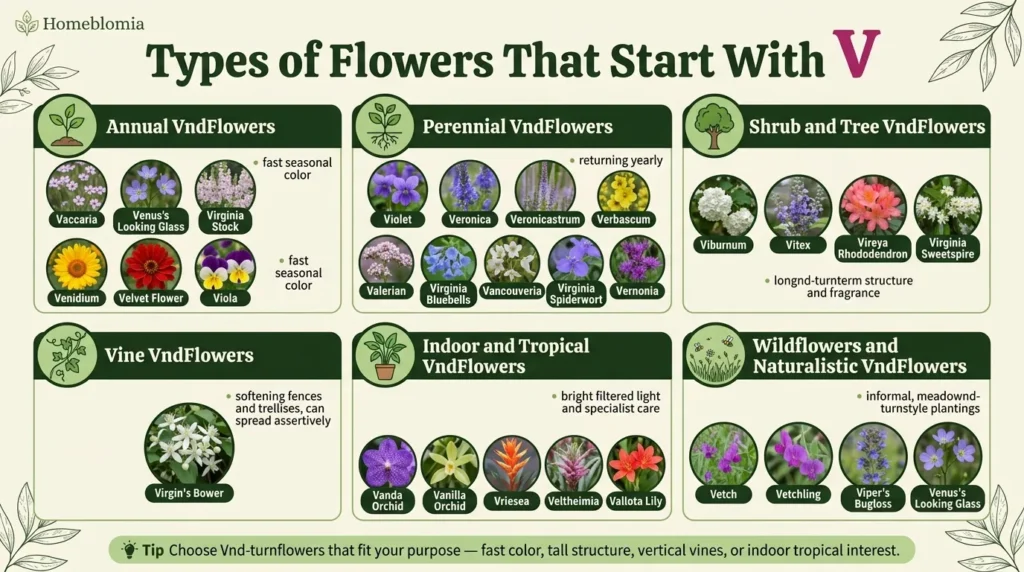
Types of Flowers That Start With V
Annual V-Flowers
Vaccaria, Venus’s Looking Glass, Virginia Stock, Venidium, Velvet Flower, and many Viola varieties.
Perennial V-Flowers
Violet, Veronica, Veronicastrum, Verbascum, Valerian, Virginia Bluebells, Vancouveria, Virginia Spiderwort, and Vernonia.
Shrub and Tree V-Flowers
Viburnum, Vitex, Vireya Rhododendron, and Virginia Sweetspire.
Vine V-Flowers
Virgin’s Bower.
Indoor and Tropical V-Flowers
Vanda Orchid, Vanilla Orchid, Vriesea, Veltheimia, and Vallota Lily.
Wildflowers and Naturalistic V-Flowers
Vetch, Vetchling, Viper’s Bugloss, and Venus’s Looking Glass.
For more wildflower-leaning entries, see Flowers That Start With T, and for more color-rich picks in a similar vein, Flowers That Start With P.
V-Flowers by Color
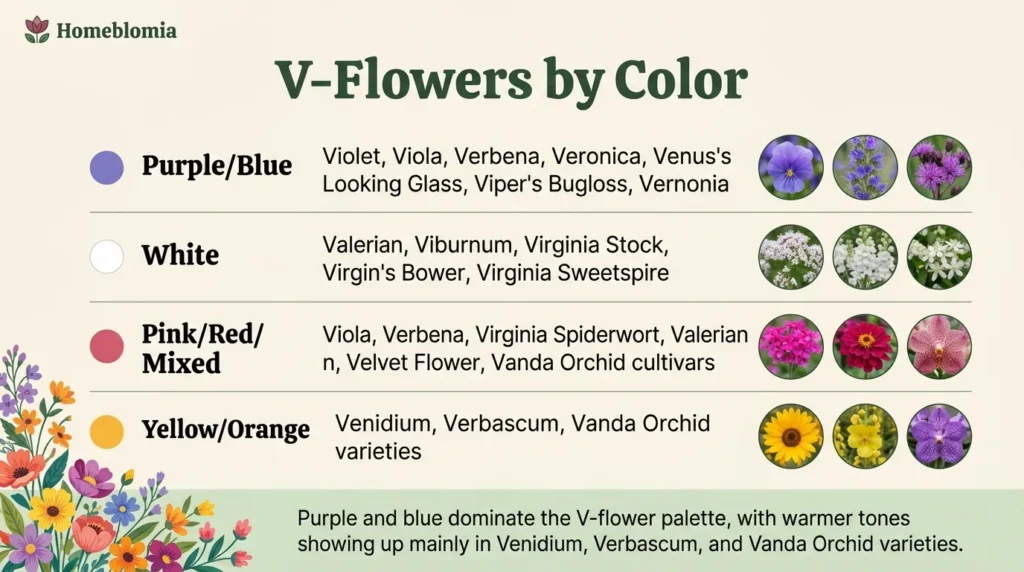
- Purple/Blue: Violet, Viola, Verbena, Veronica, Venus’s Looking Glass, Viper’s Bugloss, Vernonia
- White: Valerian, Viburnum, Virginia Stock, Virgin’s Bower, Virginia Sweetspire
- Pink/Red/Mixed: Viola, Verbena, Virginia Spiderwort, Valerian, Velvet Flower, many Vanda Orchid cultivars
- Yellow/Orange: Venidium, Verbascum (some forms), some Vanda Orchid varieties
Companion Planting Notes
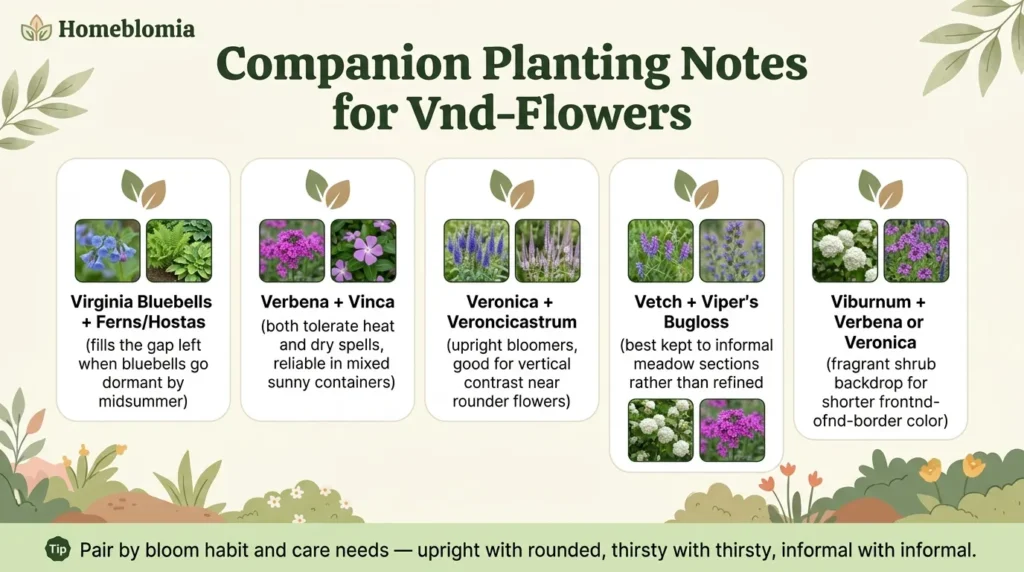
- Virginia Bluebells, which go fully dormant by mid-summer, pair well with later-emerging shade perennials like ferns or hostas that fill the visual gap it leaves behind.
- Verbena and Vinca both tolerate heat and dry spells, making them reliable companions in mixed sunny containers where consistent watering isn’t guaranteed.
- Veronica and Veronicastrum, both upright bloomers, work well planted near rounder, mounding flowers to add vertical contrast to a mixed border.
- Vetch and Viper’s Bugloss are best kept to informal or meadow-style sections of a garden rather than mixed into refined borders, where their looser habit can look untidy next to tightly maintained plants.
- Viburnum, as a fragrant flowering shrub, works well as a backdrop for shorter, non-fragrant flowers like Verbena or Veronica in front.
Seasonal Care Calendar
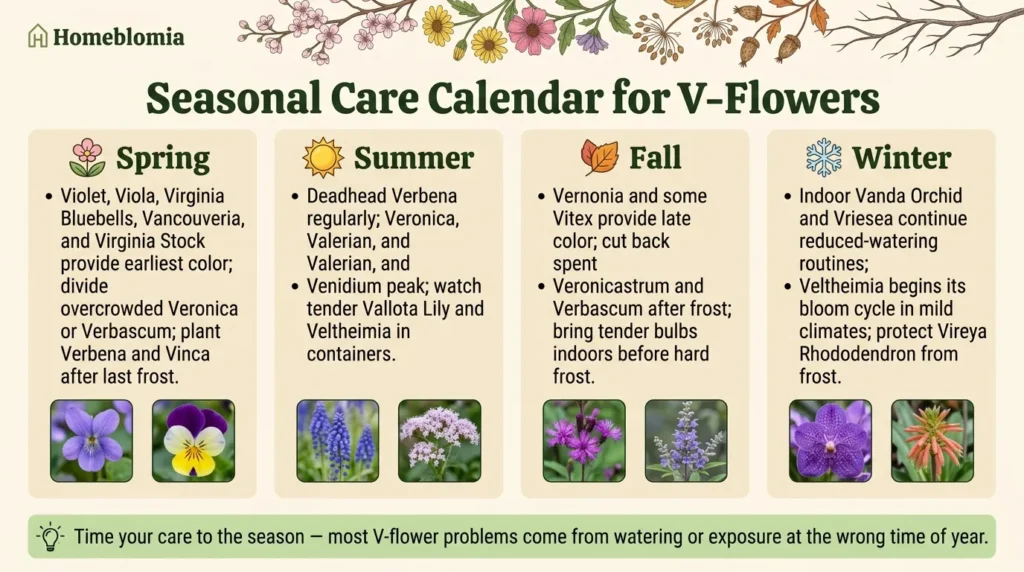
- Spring: Violet, Viola, Virginia Bluebells, Vancouveria, and Virginia Stock provide the earliest V-flower color; divide overcrowded Veronica or Verbascum clumps; plant out Verbena and Vinca after the last frost risk has passed.
- Summer: Deadhead Verbena regularly to extend bloom through the season; Veronica, Valerian, and Venidium reach peak flowering; watch tender bulbs like Vallota Lily and Veltheimia for active growth if grown in containers outdoors.
- Fall: Vernonia and some Vitex varieties provide late-season color for pollinators; cut back spent Veronicastrum and Verbascum stems after frost; bring tender Veltheimia and Vallota Lily bulbs into shelter before hard frost in cold climates.
- Winter: Indoor Vanda Orchid and Vriesea continue their normal care routine with reduced watering if dormant; Veltheimia begins its bloom cycle in mild climates; protect Vireya Rhododendron from any frost exposure.
Safety, Toxicity & Notes
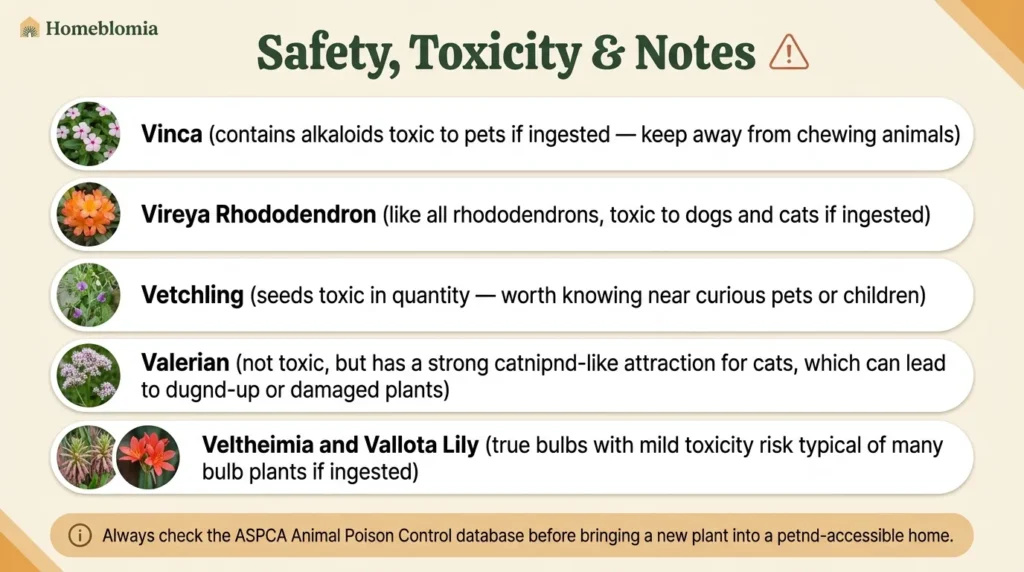
Several V-flowers deserve specific caution:
- Vinca (periwinkle) contains alkaloids that are toxic to pets if ingested, and this plant should be kept away from animals prone to chewing garden plants.
- Vireya Rhododendron, like all rhododendrons, is toxic to dogs and cats if ingested.
- Vetchling produces seeds that are toxic in quantity, a detail worth knowing if the plant is grown near curious pets or children.
- Valerian doesn’t pose a toxicity risk in the traditional sense, but it has a strong, catnip-like attraction for cats, which can lead to plants being dug up or damaged.
- Veltheimia and Vallota Lily, both true bulbs, carry mild toxicity risk typical of many bulb plants if ingested.
Flower Meanings & Symbolism
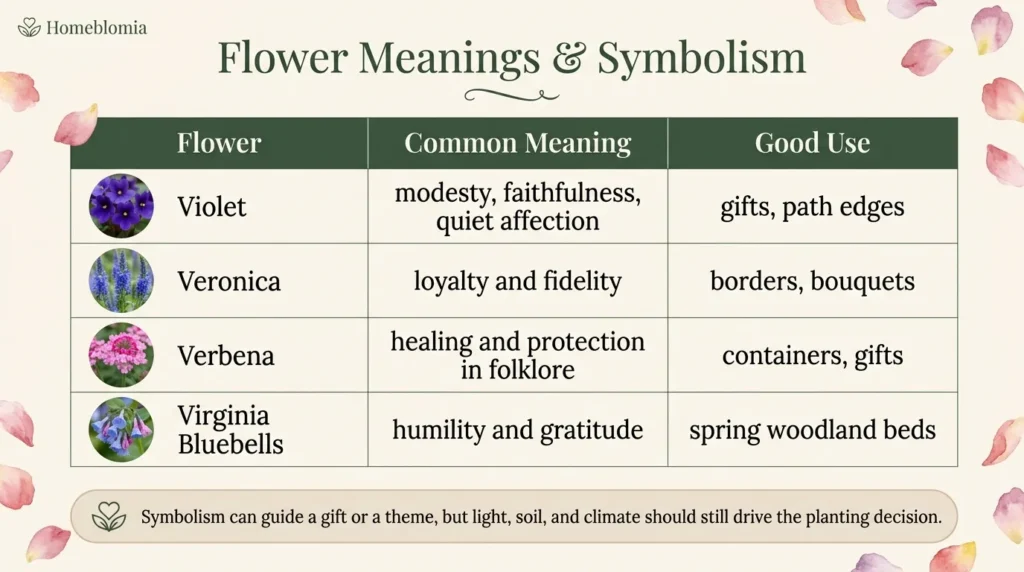
- Violet — modesty, faithfulness, and quiet affection
- Veronica — loyalty and fidelity
- Verbena — historically associated with healing and protection in folklore traditions
- Virginia Bluebells — often associated with humility and gratitude in modern floral symbolism
Decision Helper: Which V-Flower Fits Your Space?
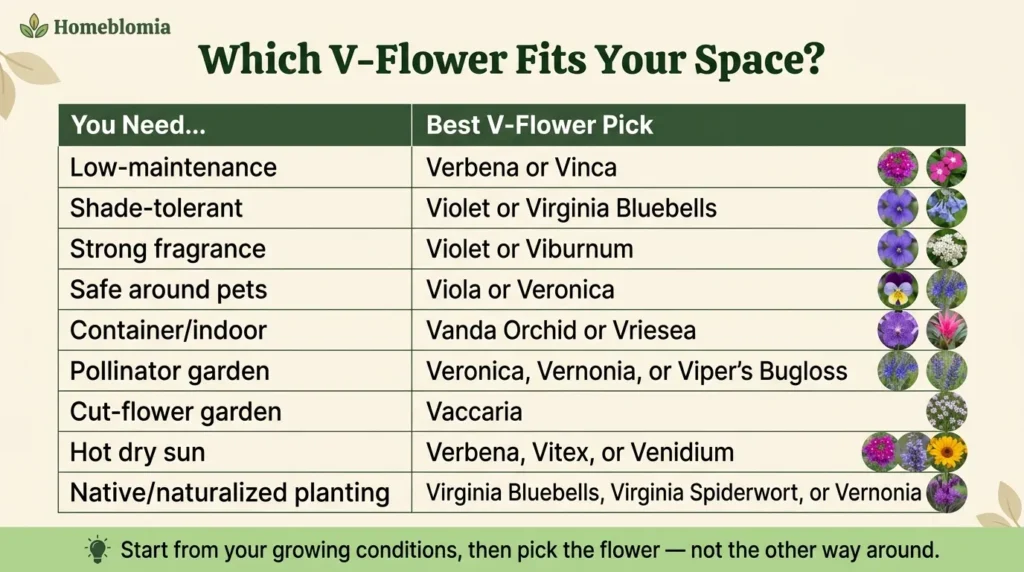
| You need… | Best V-flower pick |
|---|---|
| Low-maintenance | Verbena or Vinca |
| Shade-tolerant | Violet or Virginia Bluebells |
| Strong fragrance | Violet or Viburnum |
| Safe around pets | Viola or Veronica |
| Container/indoor | Vanda Orchid or Vriesea |
| Pollinator garden | Veronica, Vernonia, or Viper’s Bugloss |
| Cut-flower garden | Vaccaria |
| Hot, dry sun | Verbena, Vitex, or Venidium |
| Native/naturalized planting | Virginia Bluebells, Virginia Spiderwort, or Vernonia |
FAQ
How many flowers start with the letter V?
Around 30 flowers and flowering plants are commonly grouped under the letter V, spanning true flowers, shrubs, vines, and orchids.
What is the most popular flower that starts with V?
Violet is the most universally recognized V-flower by name, while Verbena is likely the most widely grown in actual gardens due to its long bloom season and heat tolerance.
Which flower starting with V smells the best?
Violet has one of the most beloved, soft fragrances of any spring flower. Viburnum and Virginia Stock are also notably fragrant among V-flowers.
Which flowers that start with V are perennials?
Violet, Veronica, Veronicastrum, Verbascum, Valerian, Virginia Bluebells, Vancouveria, Virginia Spiderwort, and Vernonia are all true perennials in the right climate.
Are there indoor flowers that start with V?
Yes, Vanda Orchid, Vanilla Orchid, and Vriesea are all well-suited to bright, indoor growing conditions.
Which V-flowers are good for beginners?
Viola, Verbena, Veronica, Vinca, and Virginia Stock are all forgiving, easy-to-grow choices.
What are rare flowers that start with V?
Vanda Orchid, Vanilla Orchid, Vriesea, Veltheimia, and Vancouveria are all less commonly grown, either due to specific climate needs or limited availability.
What flower starts with V and is purple?
Violet, Viola, Verbena, Veronica, and Vernonia all commonly appear in purple shades.
Are Viburnum and Vitex really flowers?
They’re flowering shrubs rather than true herbaceous flowers, the distinction matters for care and placement, but both produce genuine ornamental blooms and are commonly included in flower guides for that reason.
Is Vinca toxic to pets?
Yes, Vinca contains alkaloids that are toxic if ingested by cats or dogs, so it should be planted with that in mind in pet-accessible areas.
What’s a good V-flower for a fragrant garden path?
Violet, planted low along a path edge, offers fragrance at the exact height where it’s most noticeable while walking by.
Do any V-flowers attract cats specifically?
Valerian has an effect on cats similar to catnip and may attract feline attention or damage if planted where cats have access.