90 Best Summer Flowers that bloom : Names, Bloom Times, Light, Water, and Care
Summer flowers bring color, fragrance, texture, and pollinator activity at the height of the warm season. Some grow fast from seed, some return for years, and others thrive in pots, hanging baskets, cutting gardens, borders, or hot-climate landscapes.
This guide covers 90 Best Summer Flowers that bloom, each with botanical name, type, bloom window, light, height, water needs, best use, and a care note. It includes annuals, perennials, bulbs, corms, rhizomes, vines, shrubs, and tropical flowering plants.
Not every summer flower blooms all summer. Some peak in early summer, some in midsummer, and some run into fall. Results depend on sun, heat, water, soil drainage, pot size, and local climate.
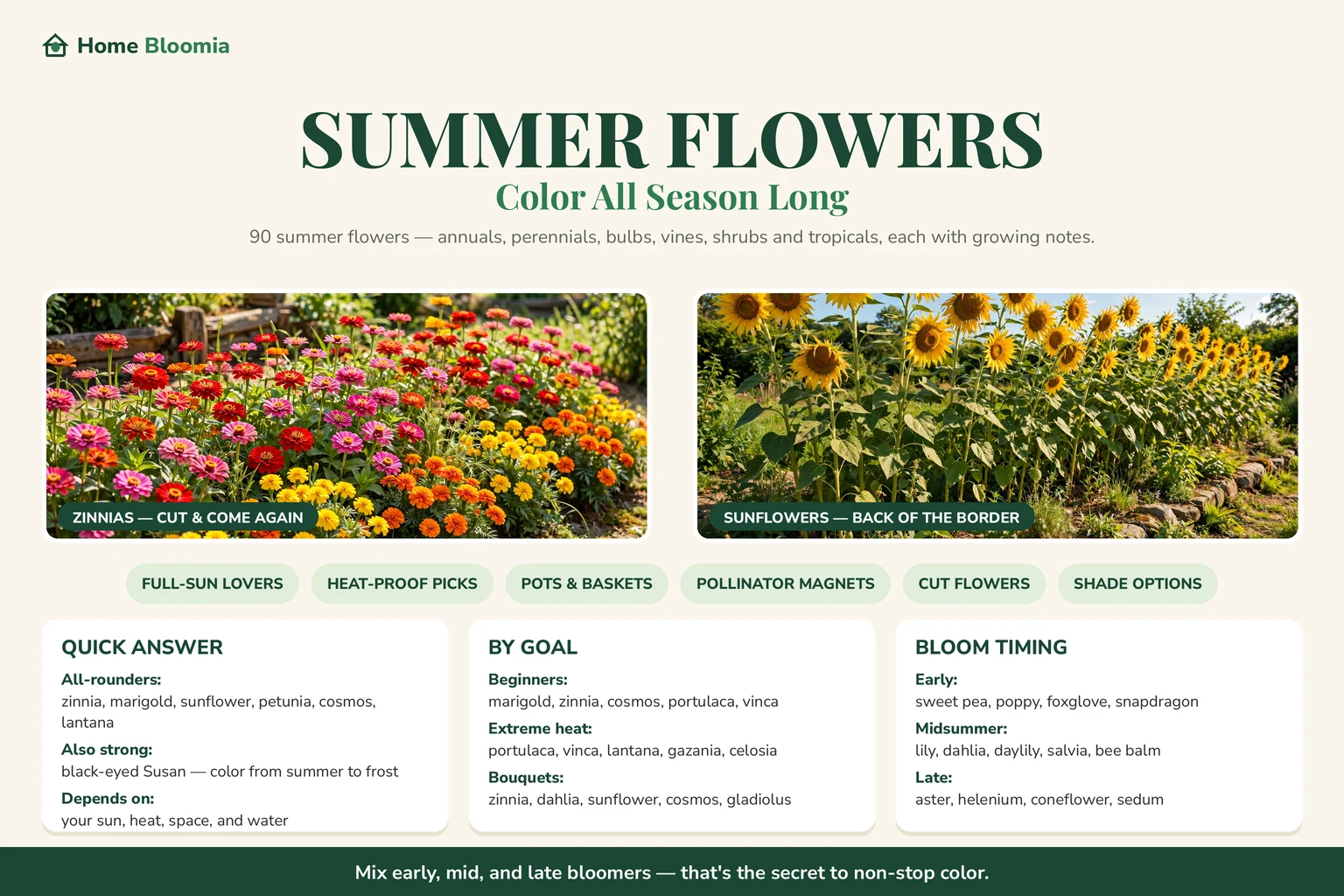
For most gardens, the strongest all-rounders are zinnia, marigold, sunflower, petunia, cosmos, lantana, and black-eyed Susan. They are colorful, easy to find, and work in borders, beds, pots, and pollinator areas.
The best choice depends on your space: full sun or part shade, dry or humid, container or cutting garden.
Quick Answer: What Are the Best Summer Flowers?
| Goal | Best Summer Flowers |
| Beginners | Marigold, zinnia, cosmos, portulaca, vinca, sunflower |
| Extreme heat | Portulaca, vinca, lantana, gazania, celosia, Mexican sunflower |
| Pots | Petunia, calibrachoa, begonia, geranium, fuchsia, verbena |
| Pollinators | Bee balm, salvia, butterfly weed, lavender, coneflower, liatris |
| Bouquets | Zinnia, dahlia, sunflower, cosmos, gladiolus, snapdragon |
Summer Flowers at a Glance
| Flower | Type | Best Use | Light | Water | Bloom Window | Height | Container Friendly |
| Zinnia | Annual | Cutting garden, borders | Full sun | Moderate | Summer–frost | 1–4 ft | Yes |
| Marigold | Annual | Edging, beds, pots | Full sun | Low–moderate | Summer–frost | 6 in–3 ft | Yes |
| Sunflower | Annual | Back borders, pollinators | Full sun | Moderate | Mid–late summer | 1–12 ft | Dwarf types |
| Petunia | Annual | Pots, baskets, borders | Full–part sun | Moderate | Spring–frost | 6 in–2 ft | Yes |
| Lantana | Tender perennial | Heat, butterflies, pots | Full sun | Low once settled | Summer–fall | 1–6 ft | Yes |
| Cosmos | Annual | Cottage beds, bouquets | Full sun | Low–moderate | Summer–frost | 2–6 ft | Yes |
| Coneflower | Perennial | Pollinators, dry beds | Full sun | Low once settled | Mid–late summer | 2–5 ft | Some types |
| Black-eyed Susan | Perennial/annual | Borders, long color | Full sun | Low–moderate | Summer–fall | 1–4 ft | Some types |
| Dahlia | Tuber | Cut flowers, borders | Full sun | Moderate | Summer–fall | 1–6 ft | Dwarf types |
| Hibiscus | Shrub/perennial | Tropical color | Full sun | Moderate–high | Summer–fall | 2–10 ft | Yes |
| Canna lily | Rhizome | Tall color, containers | Full sun | Moderate | Summer–fall | 3–8 ft | Yes |
| Lavender | Perennial | Fragrance, bees, edging | Full sun | Low | Early–midsummer | 1–3 ft | Yes |
| Begonia | Annual/tuber | Shade pots, beds | Part shade | Moderate | Summer–frost | 6 in–2 ft | Yes |
| Portulaca | Annual | Hot, dry spots | Full sun | Low | Summer–frost | 4–8 in | Yes |
| Calibrachoa | Annual | Hanging baskets | Full–part sun | Moderate | Spring–frost | 6–12 in | Yes |
How This List Was Chosen
The flowers were chosen to cover different summer needs: full-sun beds, hot climates, containers, borders, pollinator gardens, cutting gardens, balconies, and large backyard beds. Each flower appears once, even if it has several common names, and was chosen for at least one strong quality: bloom length, heat tolerance, container value, color range, pollinator support, scent, cutting value, or ease of care.
What Counts as a Summer Flower?
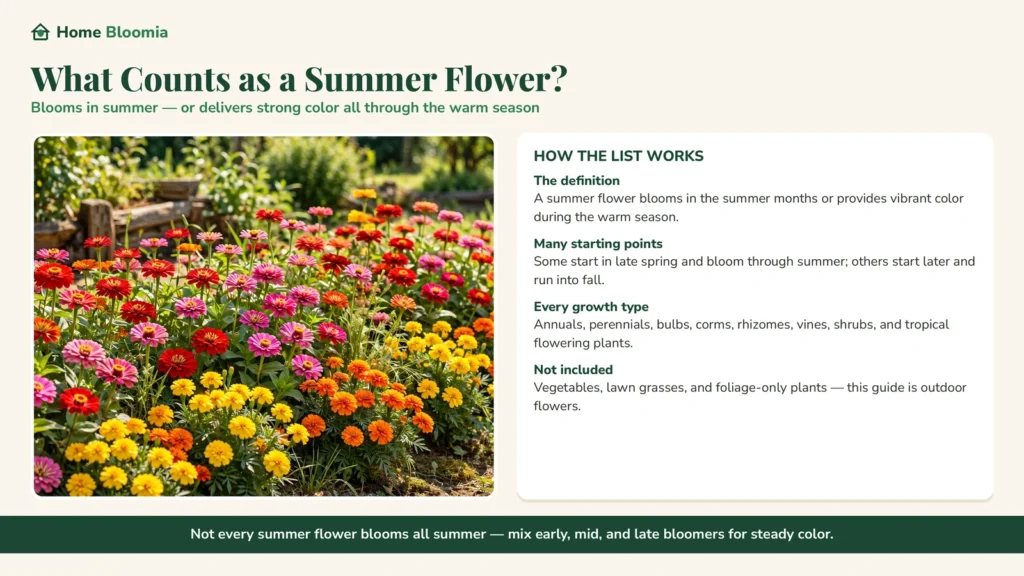
A summer flower either blooms in the summer months or provides vibrant color during the warm season. Some start in late spring and bloom through summer; others start later and continue into fall. The list includes perennials, annuals, bulbs, corms, rhizomes, vines, shrubs, and tropical plants. This guide focuses on outdoor flowering plants, not vegetables, lawn grasses, or foliage-only plants.
Annual vs. Perennial Summer Flowers
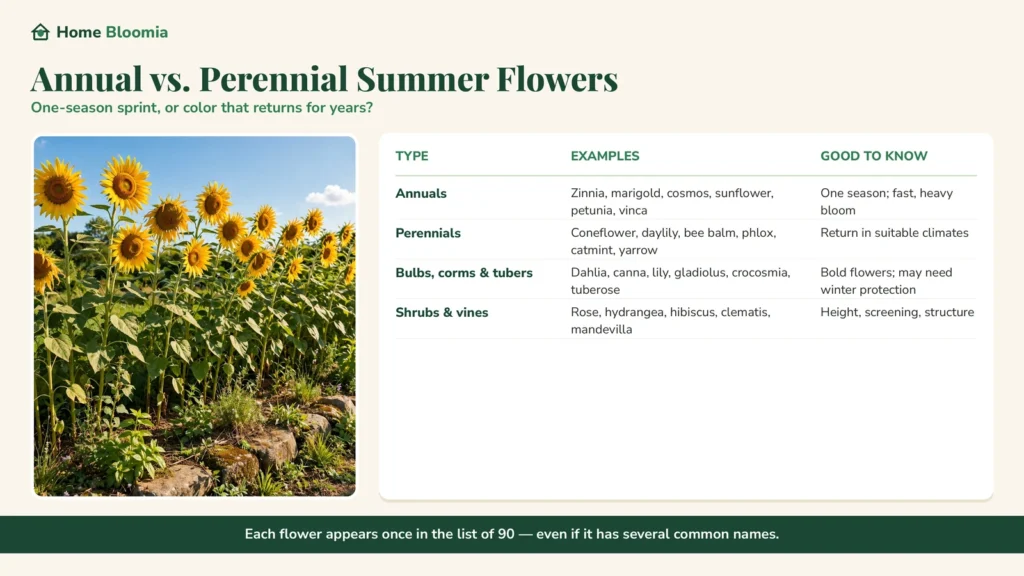
- Annuals (zinnia, marigold, cosmos, sunflower, petunia, vinca) complete their life cycle in one season, grow fast, and bloom heavily.
- Perennials (coneflower, daylily, bee balm, black-eyed Susan, phlox, catmint, yarrow) return in suitable climates.
- Bulbs, corms, rhizomes, and tubers (dahlia, canna, lily, gladiolus, crocosmia, tuberose) bring bold flowers but may need winter protection in cold regions.
- Shrubs and vines (rose, hydrangea, hibiscus, clematis, mandevilla, passionflower, bougainvillea, morning glory) add height, screening, and structure.
Bloom Time Guide
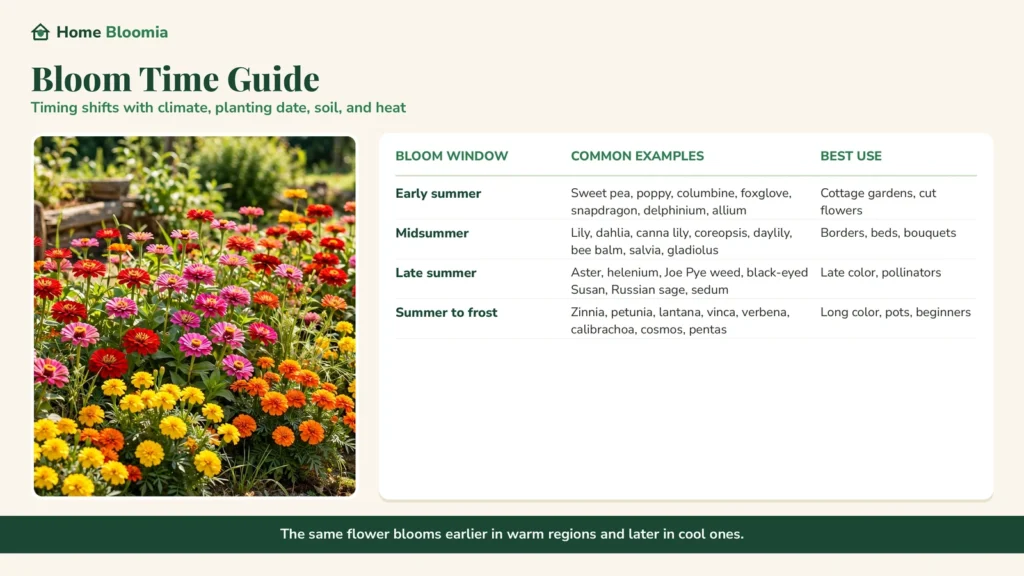
Timing varies with climate, planting date, soil, water, and heat. The same flower may bloom earlier in warm regions and later in cool ones.
| Bloom Window | Common Examples | Best Use |
| Early summer | Sweet pea, poppy, columbine, foxglove, snapdragon, delphinium, allium | Cottage gardens, cool summer beds, cut flowers |
| Midsummer | Lily, dahlia, canna lily, coreopsis, daylily, bee balm, salvia, gladiolus | Borders, flower beds, bouquets |
| Late summer | Aster, helenium, Joe Pye weed, black-eyed Susan, Russian sage, coneflower, sedum | Late color, pollinator gardens, large borders |
| Summer to frost | Zinnia, petunia, lantana, vinca, verbena, calibrachoa, cosmos, pentas, globe amaranth, angelonia | Long color, pots, warm beds, beginners |
For steady color, mix early, mid, and late bloomers rather than relying on one type.
Soil and Water Needs
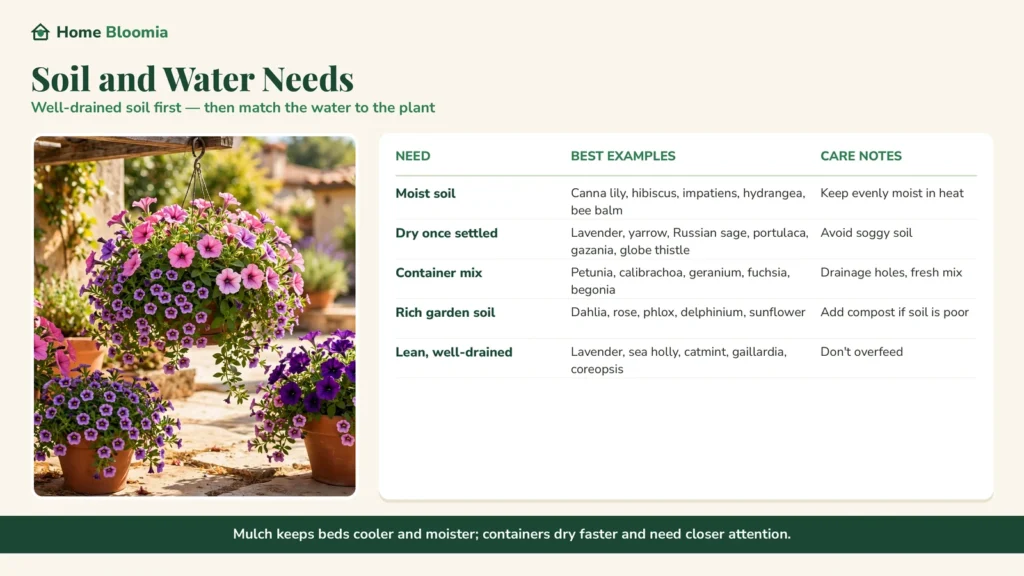
Most warm-season flowers need well-drained soil, especially in pots and hot weather. Good drainage keeps roots from sitting in water while still giving enough moisture for continued flowering.
| Need | Best Examples | Care Notes |
| Moist soil | Canna lily, hibiscus, impatiens, hydrangea, bee balm | Keep evenly moist in heat |
| Dry soil once settled | Lavender, yarrow, Russian sage, portulaca, gazania, globe thistle | Avoid soggy soil and heavy watering |
| Container mix | Petunia, calibrachoa, geranium, fuchsia, begonia | Use drainage holes and fresh mix |
| Rich garden soil | Dahlia, rose, phlox, delphinium, sunflower | Add compost where soil is poor |
| Lean, well-drained soil | Lavender, sea holly, catmint, gaillardia, coreopsis | Don’t overfeed drought-tolerant plants |
Mulch keeps beds cooler and moister. Containers dry faster than ground soil in hot weather and need closer attention.
90 Summer Flowers With Names and Growing Notes
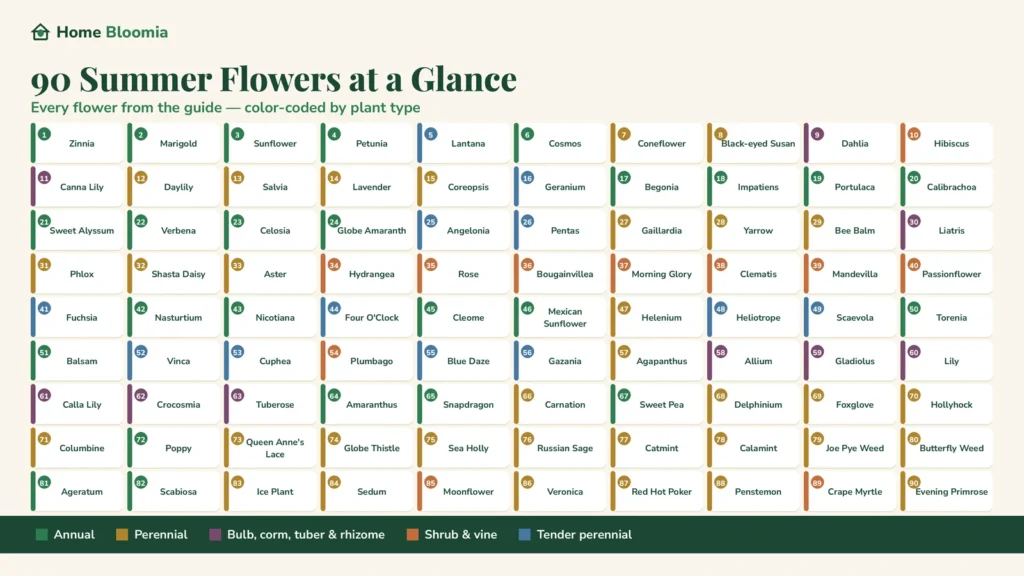
| # | Flower | Botanical Name | Type | Bloom | Light | Height | Water / Soil | Best For and Care Note |
| 1 | Zinnia | Zinnia elegans | Annual | Summer–frost | Full sun | 1–4 ft | Moderate; well-drained | Cutting gardens, borders; sow after warm weather settles and cut often. Profusion and Benary’s Giant are useful varieties. |
| 2 | Marigold | Tagetes | Annual | Summer–frost | Full sun | 6 in–3 ft | Low–moderate | Edging, beds, pots; deadhead to stay neat. |
| 3 | Sunflower | Helianthus annuus | Annual | Mid–late summer | Full sun | 1–12 ft | Moderate; fertile | Back borders, pollinators; use dwarf types in pots. |
| 4 | Petunia | Petunia | Annual | Spring–frost | Full–part sun | 6 in–2 ft | Moderate; rich mix | Pots, baskets; feed container plants regularly. |
| 5 | Lantana | Lantana camara | Tender perennial | Summer–fall | Full sun | 1–6 ft | Low once settled | Heat, butterflies, pots; let roots establish before reducing water. |
| 6 | Cosmos | Cosmos bipinnatus | Annual | Summer–frost | Full sun | 2–6 ft | Low–moderate | Cottage beds, bouquets; avoid heavy feeding, which makes leaves not flowers. |
| 7 | Coneflower | Echinacea | Perennial | Midsummer–fall | Full sun | 2–5 ft | Low once settled | Pollinators; leave some seed heads for birds. |
| 8 | Black-eyed Susan | Rudbeckia | Perennial/annual | Summer–fall | Full sun | 1–4 ft | Low–moderate | Borders, meadow beds; plant in groups. |
| 9 | Dahlia | Dahlia | Tuber | Summer–fall | Full sun | 1–6 ft | Moderate; rich | Cut flowers; stake tall types. |
| 10 | Hibiscus | Hibiscus | Shrub/perennial/tropical | Summer–fall | Full sun | 2–10 ft | Moderate–high | Large flowers; keep hydrated in heat. |
| 11 | Canna lily | Canna indica and hybrids | Rhizome | Summer–fall | Full sun | 3–8 ft | Moderate; rich | Tall color, large pots; loves warmth and moisture. |
| 12 | Daylily | Hemerocallis | Perennial | Early–midsummer | Full–part sun | 1–4 ft | Moderate | Borders, slopes; each bloom is brief, but clumps produce many buds. |
| 13 | Salvia | Salvia | Annual/perennial | Summer–fall | Full sun | 1–4 ft | Low–moderate | Pollinators, spikes; trim after bloom flushes. |
| 14 | Lavender | Lavandula | Perennial | Early–midsummer | Full sun | 1–3 ft | Low; sharply drained | Fragrance, bees; avoid wet roots. |
| 15 | Coreopsis | Coreopsis | Annual/perennial | Summer–fall | Full sun | 1–3 ft | Low–moderate | Sunny borders; trim spent flowers. |
| 16 | Geranium | Pelargonium | Annual/tender perennial | Spring–frost | Full–part sun | 1–2 ft | Moderate; well-drained | Pots, window boxes; avoid soggy roots. |
| 17 | Begonia | Begonia | Annual/tuber | Summer–frost | Part shade | 6 in–2 ft | Moderate; moist | Shade pots; protect from harsh afternoon sun. |
| 18 | Impatiens | Impatiens walleriana | Annual | Summer–frost | Shade–part shade | 6 in–2 ft | Moderate; moist | Shade color; keep evenly moist with airflow. |
| 19 | Portulaca | Portulaca grandiflora | Annual | Summer–frost | Full sun | 4–8 in | Low; sandy | Hot, dry beds; don’t overwater. |
| 20 | Calibrachoa | Calibrachoa | Annual | Spring–frost | Full–part sun | 6–12 in | Moderate | Hanging baskets; feed often. |
| 21 | Sweet alyssum | Lobularia maritima | Annual | Spring–early summer | Full–part sun | 4–10 in | Moderate | Edging, fragrance; trim if tired in heat. |
| 22 | Verbena | Verbena | Annual/perennial | Summer–fall | Full sun | 6 in–2 ft | Low–moderate | Baskets, borders; trim long stems. |
| 23 | Celosia | Celosia argentea | Annual | Summer–fall | Full sun | 8 in–3 ft | Moderate | Bold color, hot beds. |
| 24 | Globe amaranth | Gomphrena globosa | Annual | Summer–frost | Full sun | 1–2 ft | Low–moderate | Heat, dried flowers, butterflies. |
| 25 | Angelonia | Angelonia angustifolia | Annual/tender perennial | Summer–frost | Full sun | 1–2 ft | Moderate | Hot container gardens. |
| 26 | Pentas | Pentas lanceolata | Annual/tender perennial | Summer–fall | Full–part sun | 1–3 ft | Moderate; fertile | Butterflies, hummingbirds; water in dry spells. |
| 27 | Gaillardia | Gaillardia | Annual/perennial | Summer–fall | Full sun | 1–3 ft | Low once settled | Hot, dry beds; avoid wet crowns. |
| 28 | Yarrow | Achillea millefolium | Perennial | Early–late summer | Full sun | 1–3 ft | Low once settled | Dry borders, meadow style. |
| 29 | Bee balm | Monarda | Perennial | Mid–late summer | Full–part sun | 2–4 ft | Moderate; moist | Bees, hummingbirds; give airflow against mildew. |
| 30 | Liatris | Liatris spicata | Perennial/corm | Mid–late summer | Full sun | 2–4 ft | Low–moderate | Purple spikes, butterflies. |
| 31 | Phlox | Phlox paniculata | Perennial | Mid–late summer | Full–part sun | 2–4 ft | Moderate; fertile | Fragrant borders; choose mildew-resistant types. |
| 32 | Shasta daisy | Leucanthemum × superbum | Perennial | Early–midsummer | Full sun | 1–3 ft | Moderate | White flowers, cutting; deadhead. |
| 33 | Aster | Symphyotrichum | Perennial | Late summer–fall | Full sun | 1–5 ft | Moderate | Late color, pollinators. |
| 34 | Hydrangea | Hydrangea | Shrub | Summer–fall | Morning sun–part shade | 2–8 ft | Moderate–high | Large flower heads; water deeply in heat. |
| 35 | Rose | Rosa | Shrub/climber | Late spring–fall | Full sun | 1–12 ft | Moderate; rich | Fragrance, repeat bloom; mulch and prune. See types of roses. |
| 36 | Bougainvillea | Bougainvillea | Vine/shrub | Summer–fall (warm regions) | Full sun | 3–30 ft | Low once settled | Hot climates, walls; avoid constantly wet roots. |
| 37 | Morning glory | Ipomoea | Annual vine | Summer–fall | Full sun | 6–15 ft | Moderate | Trellises; can self-seed heavily. |
| 38 | Clematis | Clematis | Perennial vine | Varies, often summer | Sun on top, cool roots | 6–20 ft | Moderate | Trellises; mulch roots. |
| 39 | Mandevilla | Mandevilla | Tropical vine | Summer–fall | Full–part sun | 3–10 ft | Moderate; rich mix | Pots, trellises; give support and warmth. |
| 40 | Passionflower | Passiflora | Vine | Summer–fall | Full–part sun | 6–30 ft | Moderate | Unusual flowers; some need winter protection. |
| 41 | Fuchsia | Fuchsia | Annual/tender perennial | Summer–fall | Part shade | 1–3 ft | Moderate; moist | Baskets; protect from extreme afternoon heat. |
| 42 | Nasturtium | Tropaeolum majus | Annual | Summer–fall | Full–part sun | 1–10 ft | Low–moderate | Edible flowers; rich feeding reduces flowers. |
| 43 | Nicotiana | Nicotiana | Annual/tender perennial | Summer–fall | Full–part sun | 1–5 ft | Moderate | Evening fragrance, hummingbirds. |
| 44 | Four o’clock | Mirabilis jalapa | Tender perennial/annual | Summer–fall | Full–part sun | 2–4 ft | Moderate | Late-day bloom, fragrance, hot beds. Sometimes called Gul e Abbasi locally. |
| 45 | Cleome | Cleome hassleriana | Annual | Summer–fall | Full sun | 3–5 ft | Moderate | Back borders, airy height. |
| 46 | Mexican sunflower | Tithonia rotundifolia | Annual | Summer–fall | Full sun | 4–8 ft | Low–moderate | Heat, butterflies. |
| 47 | Helenium | Helenium | Perennial | Mid–late summer | Full sun | 2–5 ft | Moderate | Late warm-color borders. |
| 48 | Heliotrope | Heliotropium arborescens | Annual/tender perennial | Summer–fall | Full–part sun | 1–2 ft | Moderate; fertile | Fragrance, containers. |
| 49 | Scaevola | Scaevola aemula | Annual/tender perennial | Summer–frost | Full–part sun | 6–12 in | Moderate | Baskets, hot patios. |
| 50 | Torenia | Torenia fournieri | Annual | Summer–fall | Part shade–shade | 6–12 in | Moderate; moist | Shade pots; keep roots evenly moist. |
| 51 | Balsam | Impatiens balsamina | Annual | Summer–fall | Part shade | 1–2 ft | Moderate; fertile | Old-fashioned beds, seed growing. |
| 52 | Vinca | Catharanthus roseus | Annual/tender perennial | Summer–frost | Full sun | 8 in–2 ft | Low–moderate | Heat, bedding; avoid overwatering. |
| 53 | Cuphea | Cuphea | Annual/tender perennial | Summer–fall | Full–part sun | 1–3 ft | Moderate | Hummingbirds, hot pots. |
| 54 | Plumbago | Plumbago auriculata | Shrub | Summer–fall | Full–part sun | 3–10 ft | Moderate | Blue flowers, warm climates. |
| 55 | Blue daze | Evolvulus glomeratus | Tender perennial/annual | Summer–fall | Full sun | 6–12 in | Low–moderate | Low edging, hot beds. |
| 56 | Gazania | Gazania rigens | Annual/tender perennial | Summer–fall | Full sun | 6–12 in | Low; sharply drained | Dry soil; flowers close in dull weather. |
| 57 | Agapanthus | Agapanthus | Perennial | Summer | Full–part sun | 1–4 ft | Moderate | Blue or white clusters; let clumps mature. |
| 58 | Allium | Allium | Bulb | Late spring–early summer | Full sun | 1–4 ft | Low–moderate | Globe heads, bees; let foliage fade naturally. |
| 59 | Gladiolus | Gladiolus | Corm | Summer | Full sun | 2–5 ft | Moderate | Cut flowers; stake in wind. |
| 60 | Lily | Lilium | Bulb | Early–late summer | Full–part sun | 2–6 ft | Moderate | Fragrance, height; many lilies are dangerous to cats. |
| 61 | Calla lily | Zantedeschia | Rhizome | Summer | Full–part sun | 1–3 ft | Moderate; rich | Elegant pots; good drainage matters. |
| 62 | Crocosmia | Crocosmia | Corm | Mid–late summer | Full–part sun | 2–4 ft | Moderate | Hummingbirds, arching stems. |
| 63 | Tuberose | Polianthes tuberosa | Bulb/tuber | Summer–early fall | Full sun | 2–3 ft | Moderate; fertile | Evening fragrance, cut stems. |
| 64 | Amaranthus | Amaranthus | Annual | Summer–fall | Full sun | 2–8 ft | Moderate | Dramatic tassels; give space. |
| 65 | Snapdragon | Antirrhinum majus | Annual/short-lived perennial | Early summer | Full–part sun | 1–3 ft | Moderate | Cut flowers; best before extreme heat. |
| 66 | Carnation | Dianthus caryophyllus | Perennial/annual | Late spring–summer | Full sun | 1–2 ft | Moderate | Fragrance, bouquets; afternoon shade helps in heat. |
| 67 | Sweet pea | Lathyrus odoratus | Annual vine | Late spring–early summer | Full–part sun | 4–8 ft | Moderate; rich | Fragrance, trellises; cut often. |
| 68 | Delphinium | Delphinium | Perennial | Early–midsummer | Full sun (light shade in heat) | 2–6 ft | Moderate; rich | Tall blue spikes; stake. Toxic if eaten. |
| 69 | Foxglove | Digitalis | Biennial/short-lived perennial | Late spring–early summer | Part sun–part shade | 2–5 ft | Moderate | Tall spires; toxic if eaten. |
| 70 | Hollyhock | Alcea rosea | Biennial/short-lived perennial | Summer | Full sun | 4–8 ft | Moderate | Back borders, fences; give airflow. |
| 71 | Columbine | Aquilegia | Perennial | Late spring–early summer | Part sun–part shade | 1–3 ft | Moderate | Woodland edges; self-seeds gently. |
| 72 | Poppy | Papaver | Annual/perennial | Late spring–early summer | Full sun | 1–4 ft | Low–moderate | Papery petals; don’t disturb roots. |
| 73 | Queen Anne’s lace | Daucus carota | Biennial | Summer | Full sun | 2–4 ft | Low–moderate | Wildflower beds; can self-seed and spread. |
| 74 | Globe thistle | Echinops | Perennial | Mid–late summer | Full sun | 2–4 ft | Low once settled | Blue globes, bees, dry beds. |
| 75 | Sea holly | Eryngium | Perennial | Summer | Full sun | 1–3 ft | Low; gritty | Metallic blue, coastal style; avoid rich, wet soil. |
| 76 | Russian sage | Salvia yangii | Perennial | Midsummer–fall | Full sun | 3–5 ft | Low once settled | Lavender-blue haze; give space. |
| 77 | Catmint | Nepeta | Perennial | Late spring–summer | Full sun | 1–2 ft | Low–moderate | Edging, bees; cut back lightly after bloom. |
| 78 | Calamint | Calamintha nepeta | Perennial | Summer–fall | Full–part sun | 1–2 ft | Low–moderate | Bees, edging; tiny pale flowers form a soft cloud. |
| 79 | Joe Pye weed | Eutrochium | Perennial | Mid–late summer | Full–part sun | 4–7 ft | Moderate–high | Butterflies, moist soil, tall back borders. |
| 80 | Butterfly weed | Asclepias tuberosa | Perennial | Summer | Full sun | 1–3 ft | Low once settled | Monarchs; dislikes moving once established. |
| 81 | Ageratum (floss flower) | Ageratum houstonianum | Annual | Summer–frost | Full–part sun | 6–24 in | Moderate | Fluffy blue edging, pots; deadhead lightly. |
| 82 | Scabiosa | Scabiosa | Annual/perennial | Summer–fall | Full sun | 1–3 ft | Low–moderate | Pollinators, cut flowers; well-drained soil. |
| 83 | Ice plant | Delosperma | Perennial groundcover | Summer | Full sun | 2–6 in | Low; gritty | Hot, dry banks and rock gardens. |
| 84 | Sedum | Hylotelephium | Perennial | Late summer–fall | Full sun | 1–2 ft | Low | Pollinators, late color; pinch in early summer for sturdier stems. |
| 85 | Moonflower | Ipomoea alba | Tender vine | Summer–fall | Full sun | 8–15 ft | Moderate | Evening fragrance, white blooms; seeds can be toxic. |
| 86 | Veronica | Veronica spicata | Perennial | Early–midsummer | Full sun | 1–3 ft | Moderate | Blue spikes, bees; deadhead for repeat bloom. |
| 87 | Red hot poker | Kniphofia | Perennial | Summer | Full sun | 2–4 ft | Moderate; well-drained | Bold torch spikes, hummingbirds. |
| 88 | Penstemon | Penstemon | Perennial | Late spring–summer | Full sun | 1–3 ft | Low–moderate | Tubular flowers, hummingbirds; needs drainage. |
| 89 | Crape myrtle | Lagerstroemia | Shrub/small tree | Summer–fall | Full sun | 3–25 ft | Low–moderate | Warm-climate summer flowers, ornamental bark. |
| 90 | Evening primrose | Oenothera | Perennial/biennial | Summer | Full sun | 1–3 ft | Low | Evening blooms, dry beds; may spread. |
How to Identify Common Heat-Tolerant Blooms
Use bloom form, plant height, and leaf habit together, since color alone can be misleading. For more unusual shapes and colors, see flowers that start with A and flowers that start with M.
| Flower Shape | Examples | Easy Identification Tip |
| Daisy-shaped | Zinnia, cosmos, coneflower, Shasta daisy, black-eyed Susan | Petals spread around a visible center |
| Spike flowers | Salvia, snapdragon, liatris, gladiolus, delphinium, veronica | Flowers climb upright stems |
| Cluster flowers | Hydrangea, pentas, phlox, lantana, bee balm | Many small flowers form one larger head |
| Trumpet flowers | Hibiscus, mandevilla, morning glory, nicotiana | Funnel- or trumpet-shaped bloom |
| Globe flowers | Allium, globe thistle, globe amaranth | Round heads on stems |
| Trailing flowers | Petunia, calibrachoa, verbena, scaevola, sweet alyssum | Stems spill over pot edges |
Best Summer Flowers by Purpose
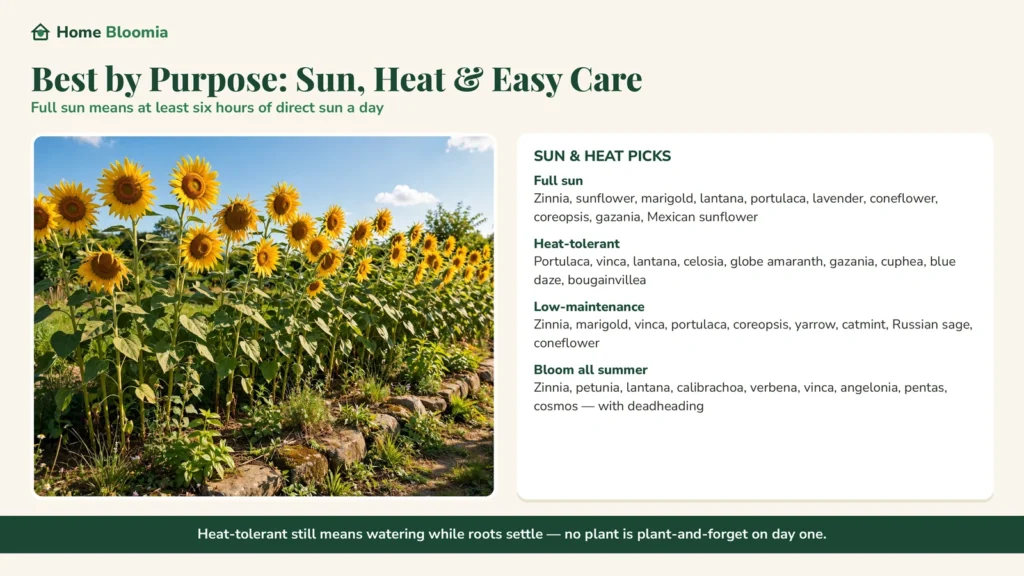
Full sun usually means at least six hours of direct sunlight a day.
- Full sun: zinnia, sunflower, marigold, lantana, portulaca, lavender, coneflower, coreopsis, gazania, Mexican sunflower.
- Heat-tolerant: portulaca, vinca, lantana, celosia, globe amaranth, gazania, Mexican sunflower, cuphea, blue daze, bougainvillea. They still need regular watering while roots settle.
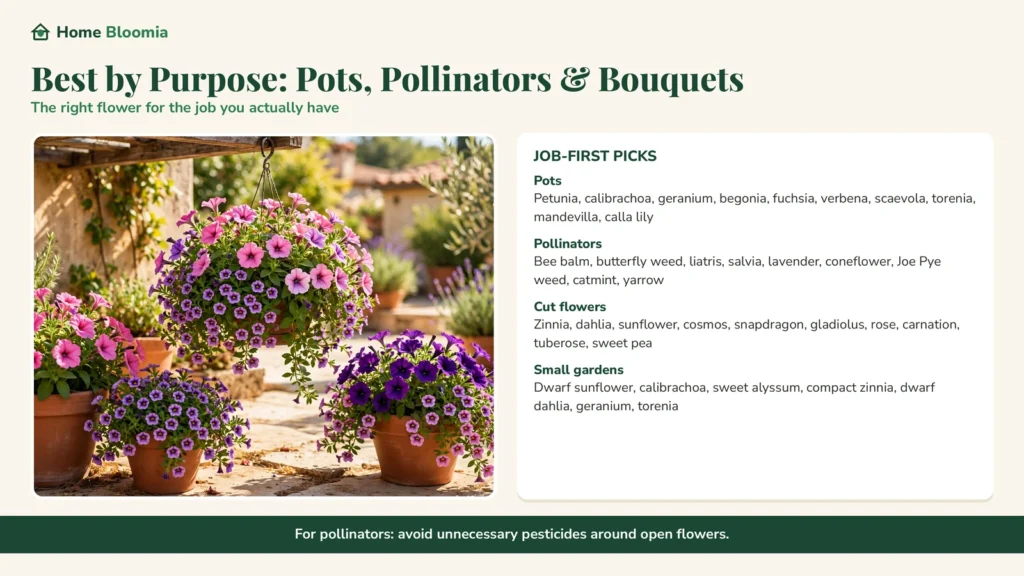
- Pots: petunia, calibrachoa, geranium, begonia, fuchsia, verbena, scaevola, torenia, mandevilla, calla lily. Use drainage holes, light mix, regular watering, and steady feeding.
- Low-maintenance: zinnia, marigold, vinca, portulaca, coreopsis, yarrow, catmint, Russian sage, coneflower, black-eyed Susan.
- Bloom all summer: zinnia, petunia, lantana, calibrachoa, verbena, vinca, angelonia, pentas, globe amaranth, cosmos. They need sun, water, light feeding, and deadheading.
- Pollinators: bee balm, butterfly weed, liatris, salvia, lavender, coneflower, black-eyed Susan, Joe Pye weed, catmint, yarrow. Avoid unnecessary pesticides around open flowers.
- Cut flowers: zinnia, dahlia, sunflower, cosmos, snapdragon, gladiolus, rose, carnation, tuberose, sweet pea. Harvest in the morning and change vase water regularly.
- Small gardens: dwarf sunflower, calibrachoa, sweet alyssum, compact zinnia, dwarf dahlia, geranium, begonia, torenia, catmint, scaevola.
Summer Flower Colors
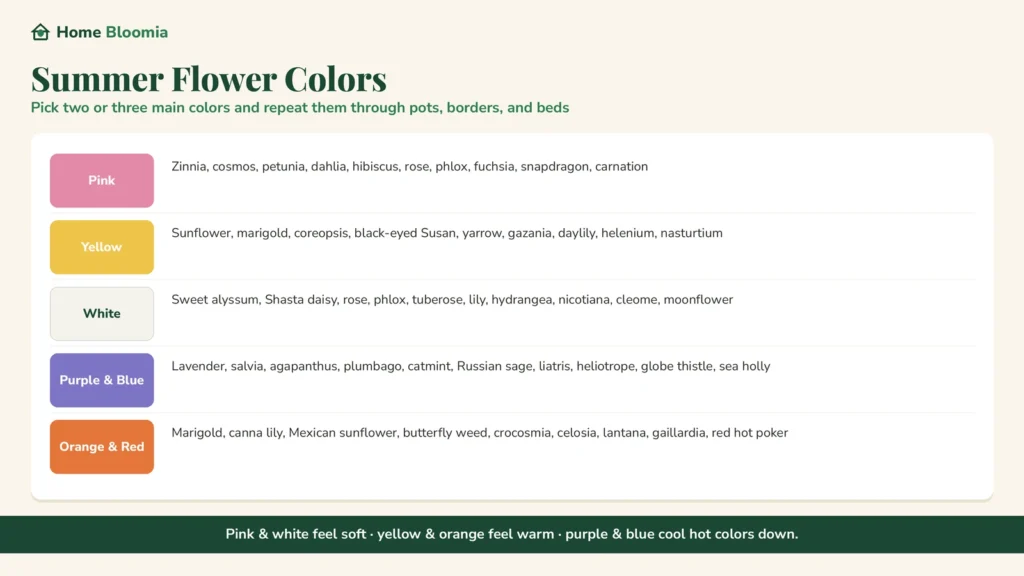
Pick two or three main colors and repeat them through pots, borders, and entry beds. Pink and white feel soft, yellow and orange feel warm, purple and blue cool down hot colors, white and green suit evening gardens, and red and yellow make bold tropical beds.
- Pink: zinnia, cosmos, petunia, dahlia, hibiscus, rose, phlox, fuchsia, snapdragon, carnation.
- Yellow: sunflower, marigold, coreopsis, black-eyed Susan, yarrow, gazania, daylily, helenium, nasturtium.
- White: sweet alyssum, Shasta daisy, rose, phlox, tuberose, lily, hydrangea, nicotiana, cleome, Queen Anne’s lace, moonflower.
- Purple and blue: lavender, salvia, agapanthus, plumbago, catmint, Russian sage, liatris, heliotrope, globe thistle, sea holly, ageratum, veronica.
- Orange and red: marigold, canna lily, Mexican sunflower, butterfly weed, crocosmia, celosia, lantana, hibiscus, gaillardia, cuphea, red hot poker.
Flowers to Plant in Summer
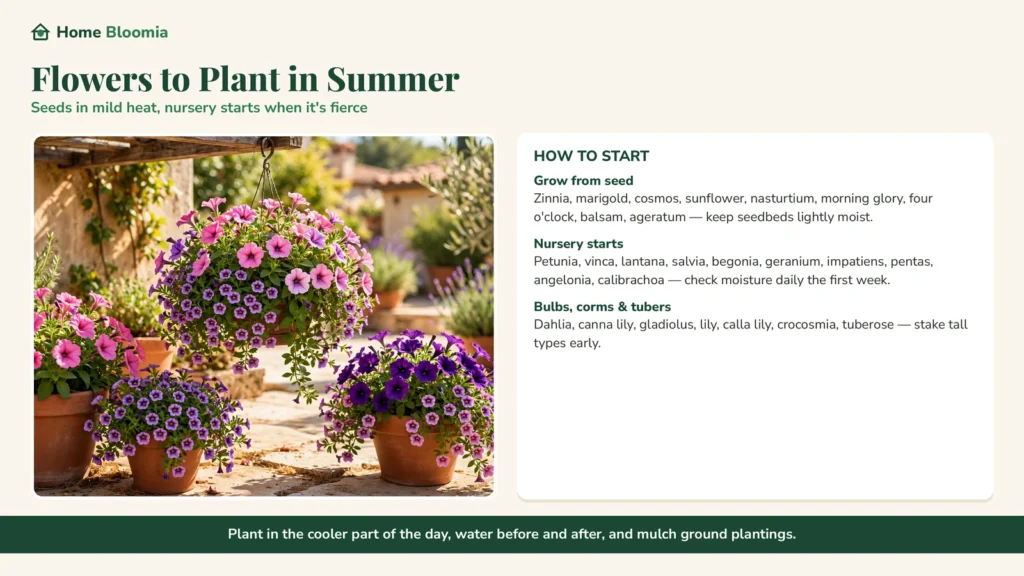
In mild early summer, seeds still grow well. In strong heat, nursery starts are safer because they already have roots and leaves. Plant in the cooler part of the day, water before and after, protect new plants from harsh afternoon sun, and mulch ground plantings.
- Grow from seed: zinnia, marigold, cosmos, sunflower, nasturtium, morning glory, four o’clock, balsam, Mexican sunflower, ageratum. Keep seedbeds lightly moist and thin seedlings.
- Nursery starts: petunia, vinca, lantana, salvia, begonia, geranium, impatiens, pentas, angelonia, calibrachoa. Check moisture daily the first week and shade lightly if the sun is severe.
- Bulbs, corms, and tubers: dahlia, canna lily, gladiolus, lily, calla lily, crocosmia, tuberose. Stake tall types before stems get heavy.
How to Choose Flowers for Your Climate
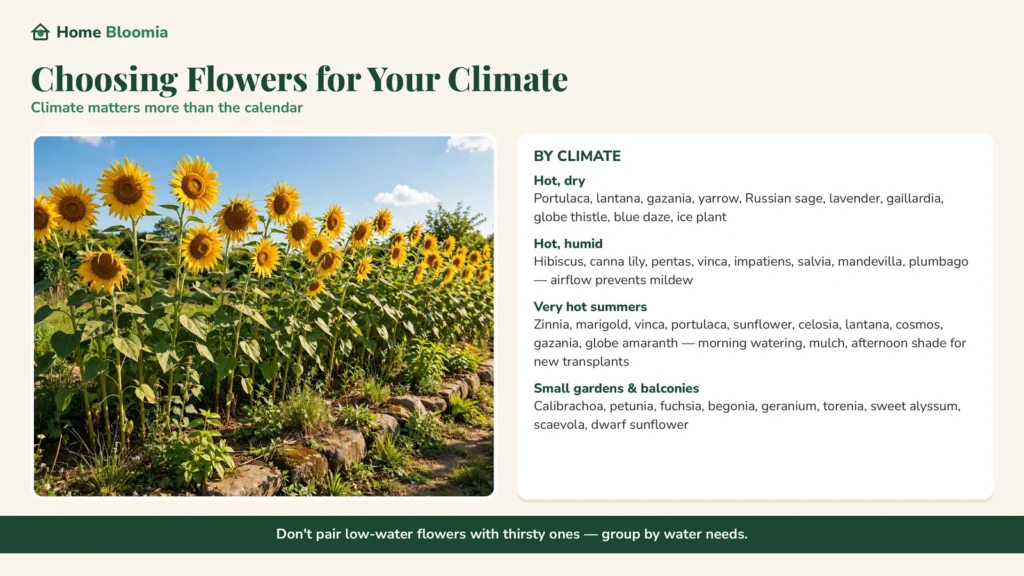
Climate matters more than the calendar. Check sun exposure, humidity, soil drainage, wind, pot size, water access, frost timing, and whether a plant is an annual or perennial in your region.
- Hot, dry climates: portulaca, lantana, gazania, yarrow, Russian sage, lavender, gaillardia, globe thistle, blue daze, ice plant. Use well-drained soil and don’t pair low-water flowers with thirsty plants.
- Hot, humid climates: hibiscus, canna lily, pentas, vinca, impatiens, salvia, mandevilla, plumbago. Airflow matters since crowded plants stay wet and invite mildew.
- Very hot summers (for example Pakistan, the Gulf, and much of South Asia): zinnia, marigold, vinca, portulaca, sunflower, celosia, lantana, cosmos, gazania, and globe amaranth. Water in the morning, mulch, shade new transplants from harsh afternoon sun, and start seeds before peak heat for stronger plants. Check the seed packet for season, germination date, heat tolerance, and height.
- Small gardens and balconies: calibrachoa, petunia, fuchsia, begonia, geranium, torenia, sweet alyssum, scaevola, and dwarf sunflower. Use compact varieties and vertical supports.
- Large borders: sunflower, hollyhock, dahlia, Joe Pye weed, hydrangea, rose, canna lily, delphinium, Russian sage. For screening behind beds, see privacy plants.
Summer Flower Garden Design Tips
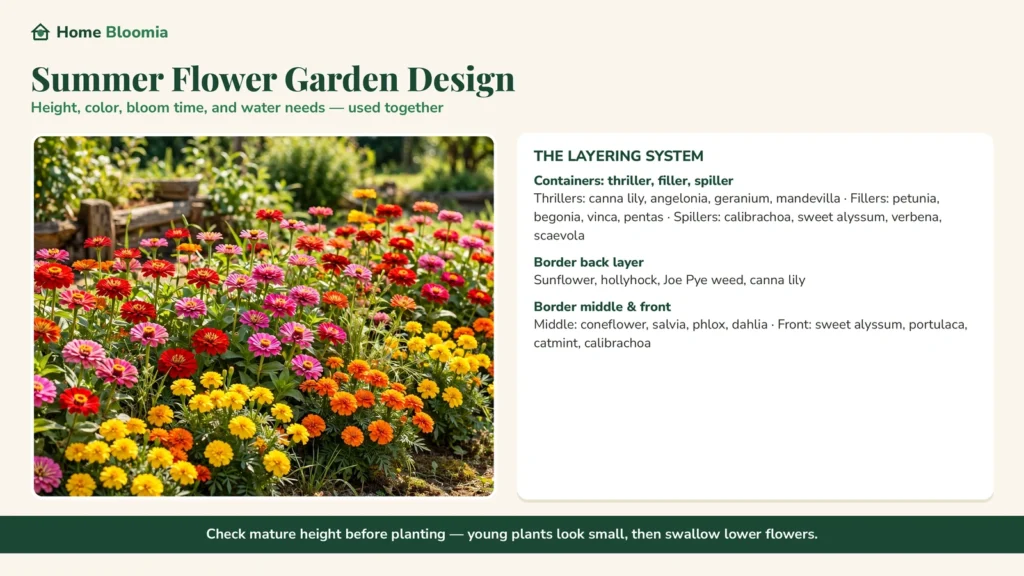
Use height, color, bloom time, and water needs together. Keep tall flowers from shading smaller sun-lovers, and keep thirsty flowers away from drought-loving ones. Repeat colors so the planting looks planned.
Containers: thriller, filler, spiller
- Thrillers: canna lily, angelonia, geranium, mandevilla
- Fillers: petunia, begonia, vinca, pentas
- Spillers: calibrachoa, sweet alyssum, verbena, scaevola
Border layers
- Back: sunflower, hollyhock, Joe Pye weed, canna lily
- Middle: coneflower, salvia, phlox, dahlia
- Front: sweet alyssum, portulaca, catmint, calibrachoa
Check mature height before planting, since young plants can look small and later swallow lower flowers.
Summer Flower Care Checklist
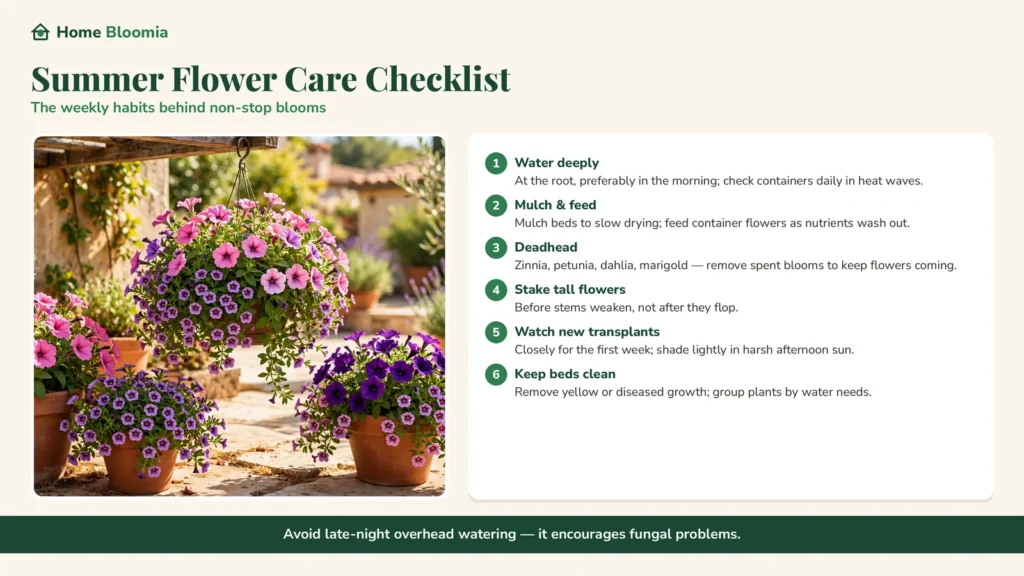
- Water deeply at the root, preferably in the morning.
- Mulch beds to slow drying.
- Feed container flowers, since nutrients wash out faster.
- Deadhead repeat bloomers such as zinnia, petunia, dahlia, and marigold.
- Stake tall flowers before stems weaken.
- Watch new transplants closely for the first week.
- Remove yellow, damaged, or diseased growth.
- Group flowers with similar water needs.
- Avoid late-night overhead watering, which encourages fungal problems.
- Check containers daily during heat waves.
- Refresh old potting mix before replanting.
Common Mistakes to Avoid
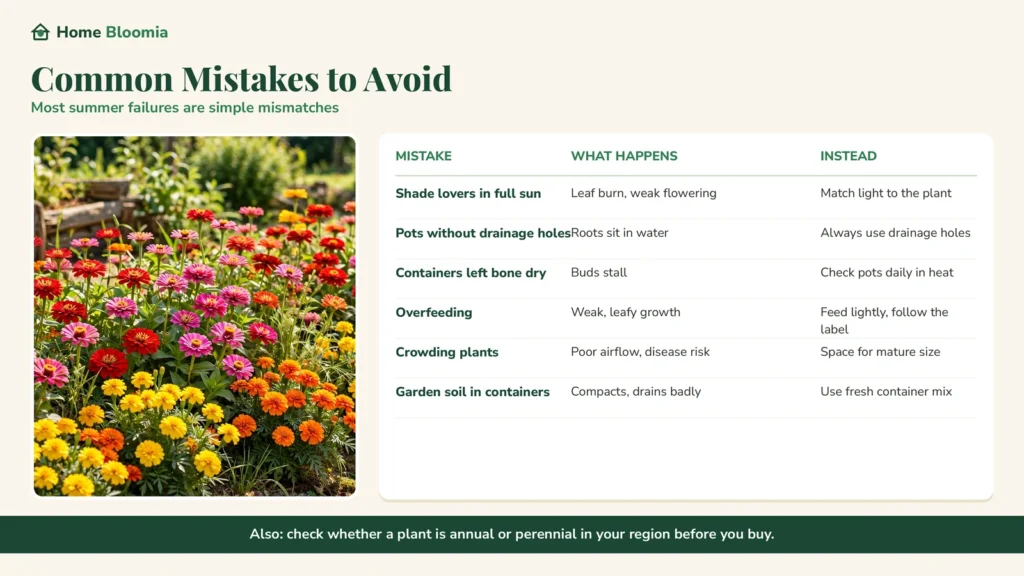
- Planting shade lovers in full afternoon sun, causing leaf burn and weak flowering
- Using pots without drainage holes
- Letting containers dry out completely, which stalls buds
- Overfeeding, which causes weak, leafy growth
- Crowding plants, which cuts airflow and raises disease risk
- Ignoring mature height
- Mixing drought-tolerant and high-water flowers
- Planting too late in extreme heat
- Using garden soil in containers
- Buying without checking whether a plant is annual or perennial in your region
- Planting toxic flowers where pets or children can reach them
Summer Flowers to Use With Caution Around Pets and Children
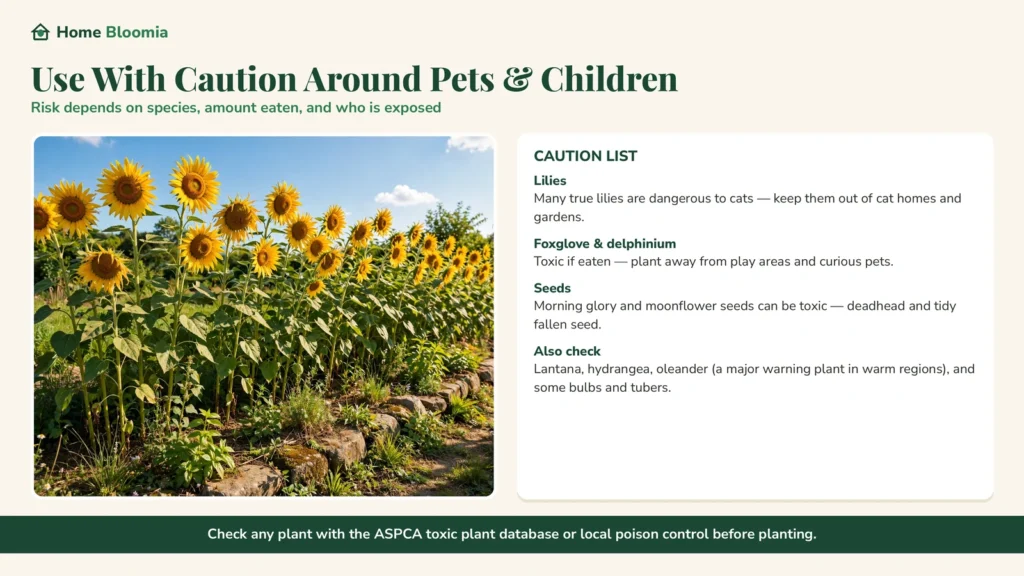
Risk depends on the species, the amount eaten, and who is exposed. Be cautious with lilies (dangerous to cats), foxglove, delphinium, morning glory and moonflower seeds, lantana, hydrangea, oleander, and some bulbs and tubers. Oleander isn’t in the list above but is a major warning plant in warm regions. Check any plant with the ASPCA toxic plant database or a local poison control source before planting near pets or children.
Conclusion
Summer flowers are easiest to choose when they match your heat, sun, space, water, and purpose. A hot, dry bed needs different flowers than a shaded balcony pot or a cutting garden. The 90 flowers above cover full sun, pots, borders, pollinators, bouquets, and very hot summer landscapes. Start with five to ten flowers suited to your conditions, then add more as the garden becomes easier to manage.
FAQs
What are the best flowers for summer?
Zinnia, marigold, sunflower, petunia, cosmos, lantana, and black-eyed Susan are the most dependable all-rounders.
Which flowers bloom all summer long?
Zinnia, petunia, lantana, calibrachoa, verbena, vinca, angelonia, pentas, globe amaranth, and cosmos, with deadheading and regular watering.
What flowers can survive extreme heat?
Portulaca, vinca, lantana, gazania, celosia, globe amaranth, Mexican sunflower, cuphea, blue daze, and bougainvillea.
Which flowers grow fastest in summer?
Zinnia, marigold, cosmos, sunflower, nasturtium, and morning glory grow quickly from seed in warm soil.
What are low-maintenance summer flowers?
Zinnia, marigold, vinca, portulaca, coreopsis, yarrow, catmint, Russian sage, coneflower, and black-eyed Susan.
Which flowers are best for pots in summer?
Petunia, calibrachoa, geranium, begonia, fuchsia, verbena, scaevola, torenia, mandevilla, and calla lily.
How do you grow flowers in summer heat?
Water deeply in the morning, mulch beds, choose heat-tolerant varieties, shade new transplants from harsh afternoon sun, and feed containers regularly.
What flowers need full sun in summer?
Zinnia, sunflower, marigold, lantana, portulaca, lavender, coneflower, coreopsis, gazania, and Mexican sunflower.
Which flowers require less water in summer?
Lavender, yarrow, Russian sage, portulaca, gazania, globe thistle, sea holly, and ice plant, once established.
What are the easiest summer flowers for beginners?
Marigold, zinnia, cosmos, portulaca, vinca, and sunflower.
Can summer flowers grow in shade?
Yes: impatiens, begonia, torenia, fuchsia, and balsam handle part shade to shade.
What are summer flowers?
Flowers that bloom in the summer months or deliver strong color during the warm season, including annuals, perennials, bulbs, vines, shrubs, and tropical plants.
What flowers can you plant in summer?
Fast seed-grown annuals such as zinnia, marigold, cosmos, and sunflower, plus nursery starts like petunia, vinca, lantana, and pentas, planted in the cooler part of the day.
Which summer flowers last longest?
Zinnia, petunia, lantana, calibrachoa, vinca, and angelonia bloom longest, with sunflower, dahlia, and sedum good for cutting and late color.